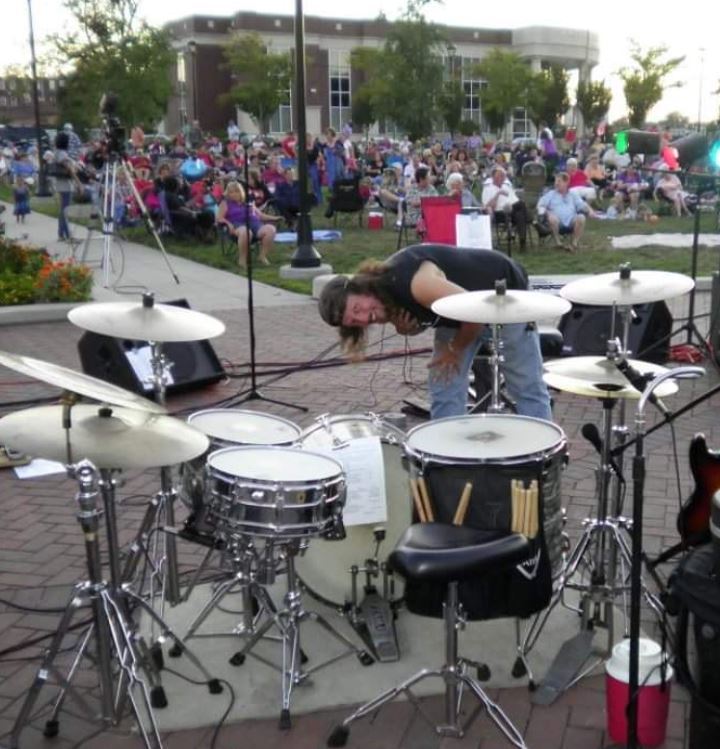
TERRY THOMAS
Todays interview is with Mr. Terry Thomas, the man that was driving force behind one of my favorite bands, The Screaming Cheetah Wheelies, and the current drummer for Nashville Roots outfit Scale hound. When SCW hit the scene in the early 90s, there was nobody like them. Twin guitars, a rhythm section that was super tight and GROOVED, and a soul inspired singer that could wail. All of this together created a new brand of Southern Rock with a funky / boogie vibe. The Crowes was bringing back Stones inspired Rock, while SCW was bringing back the Wet Willie / Skynyrd style Southern Rock with their own stamp. Terry recently recorded the new album " Take the high Road " with Nashville Roots Rockers Scale Hound , a record full of extremely well written songs that has stayed on rotation in my car ( and everywhere else ) for the past few months.
Here we go….
Mike: Whats the magic recipe for frying up some amazing Catfish?
Terry: Well, for me the best way to prepare fish is blackened. I always sprinkle a little bit of Cajun spice on everything.
Speaking of food, I like to think about drumming as in cooking up some gumbo. You can put in the spicy sausage, the shrimp, crawfish, cod, okra, rice, or whatever you want. I have never been fond of recipes. It has always been my practice to take a little bit of everything in the kitchen and sprinkle in to taste. I would say that my playing has evolved over the years, and that is primarily due to taking the influences that I heard from different sources and mixing them up into a stew. I was never one to jump on the latest fad. I just stuck with what I thought worked best for the song and for the moment, but always with a little special sauce.
Mike: Terry, what made you want to start drumming?
Terry: I was inspired by a band I saw at my local skating rink when I was about 9 yrs old. I knew I had some aptitude for music but didn’t know exactly what I wanted to play at that time. I actually started out in school band playing trumpet. I wanted to play drums then, but I was told that the percussion section was full and I would have to choose another instrument. Playing the trumpet was a good start, as it taught me music theory and melodic structure. I got my first drum kit about a year after starting on the trumpet and immediately fell in love with the drums. I continued playing trumpet all through school, but was not that serious about it. My true love was always the drums.
Mike: What was the first kit you owned?
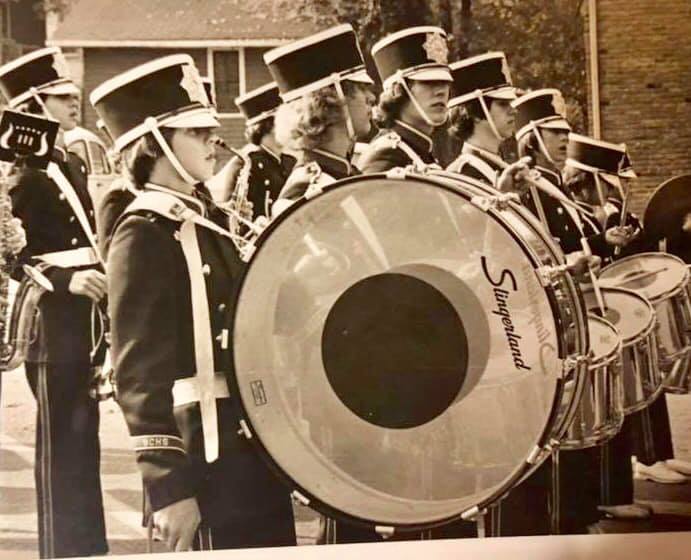
Terry: I guess my first kit was a no name Taiwan kit from Sears. My first real drum kit was a 5pc copper wrap, Slingerland set. My parents bought them from a family in our church. These two brothers had recently gone to Baptist seminary and came back from fall break with the intention to burn their evil rock instruments. Their parents (who had paid for the instruments) quickly sold their equipment before the brothers got back. I was told later by one of the brothers that the drums were the devil’s instrument, and that I should burn them. I have always loved Slingerland ever since. Back in the day, before DW and Tama, Slingerland, Ludwig and Gretsch were the top three drum companies; all of the big time players played one of those three. I felt like I had a Cadillac.
Mike: I remember those days as well. The American drum companies was king, then during the 80s the Japanese brands became more popular. When did you start up your first band?
Terry: My first band was with my best friend James (Jimbo) Spradling. We wrote songs together from day one starting around 1977. Our band went through different incarnations from southern rock, acid rock, metal, and progressive rock. We had names like Southern Stages, Metal Ages, and Kwaze Moto. We played covers, but original songs were the big focus for us. We never got to record our songs together in a studio. A few cassette recordings are all we have left.
The band had creative differences and I left to join a New Wave band in 82.
Mike: Tell us about how The Screaming Cheetah Wheelies formed.
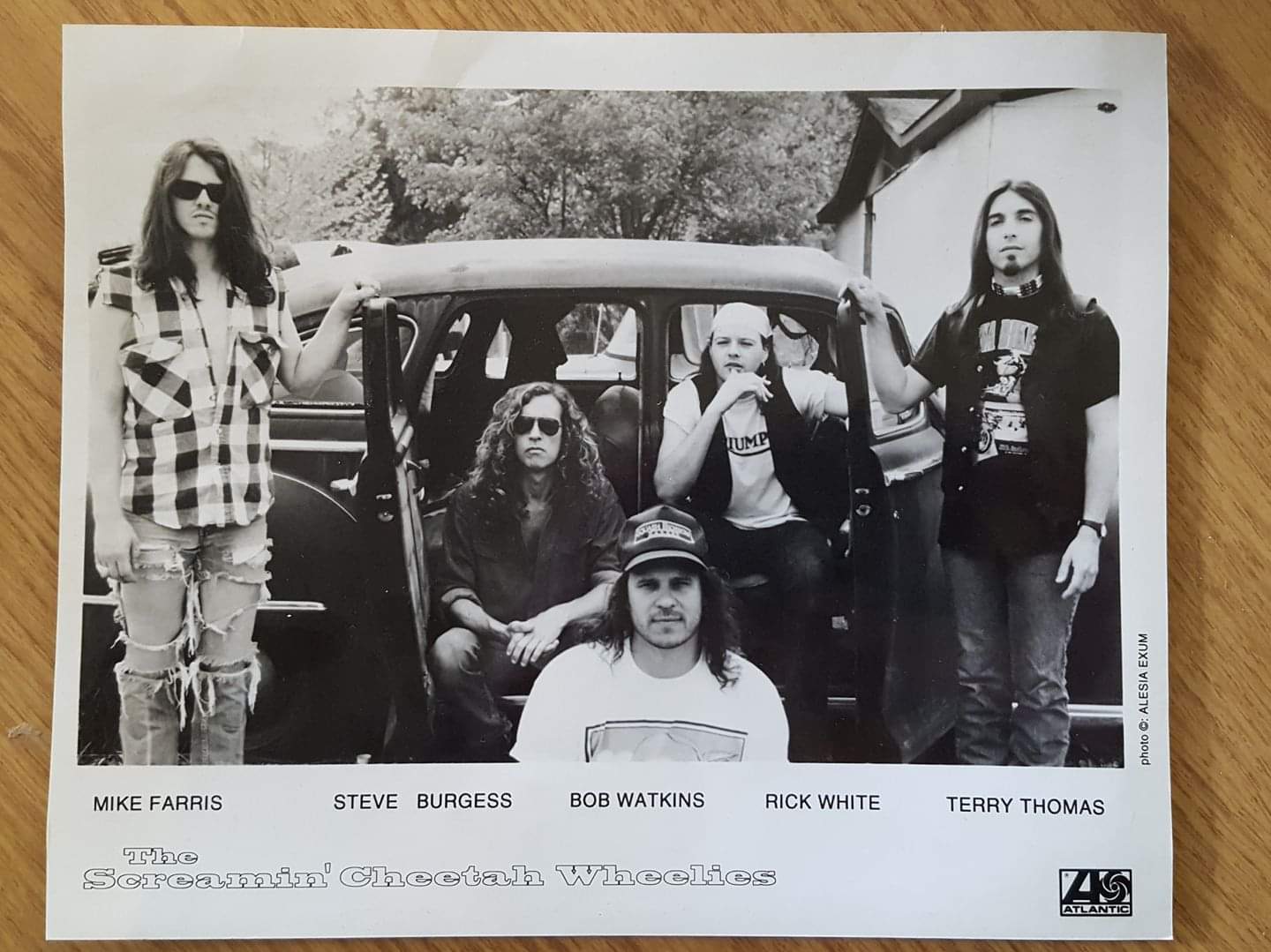
Terry: This is a long story, but I’ll try to give the short version. We were all in other bands at the time and not really looking for another one. I went to Belmont University with Rick White in 85; I met Bob Watkins when I played with country artist, Becky Hobbs in 89. He was the sound engineer but I knew he played guitar. The original bass player was Mark W. Winchester, who went on to play with Emmy Lou Harris and Brian Setzer. He played in a local rock-a-billy band called The Planet Rockers, which was the best band of that genre I have ever heard live. Anyway, I was living in a warehouse in downtown Nashville and was playing with a couple of different bands, touring the college circuit. I would have people over regularly and jam at all hours of the night. The place had become an artist loft; musicians and artists started moving in and this artist community was developing. I was right in the epicenter of all this cool stuff going on and we all mixed together with art and music in a bohemian type of lifestyle.
So I called Rick, Mark and Bob one day and asked if they wanted to get together and jam. Rick had just met this young dude named Mike Farris and asked if he could bring him along. They had jammed on some Van Morrison and blues tunes in Rick’s apartment, but had not played in a band situation yet. When I asked Rick if he could sing, he said, “I think he can, but I haven’t really heard much yet. He seems cool though.”
The first night we got together it was instant chemistry and we all knew it was magical. We wrote seven songs that night, five of which ended up on SCW’s debut album. Bob and I went to a restaurant late that first night and we just looked at each other in disbelief. Bob said, “you know, there’s going to be some really pissed off people...” I said, “what do you mean?” “We’re going to have to quit all of our other bands because this band is gonna make it”, Bob responded. I said, “Hmm, I think you’re right.”
After coming up with the silly names “Screamin Cheetah Wheelies” (which was originally a temporary name so we could play a biker rally), we started playing around town and people liked the name so we kept it. We immediately started getting attention from the music business, and was selected to play the much coveted NEA Extravaganza ( think SXSW of Nashville). After this showcase, word spread fast to producers in LA and NYC. During this time, we went through two bass players and finally found Steve Burgess, the man who has the power of a bulldozer and the technique of Jaco Pastorius. Early on, we would play at a local blues club called the Grapevine, and over pack the place with about 150 people crammed into a 95 capacity room. The hype was quickly turning into serious offers. We did a couple of demo sessions locally, but made our way to Memphis with Paul Ebersold to record at the famed Ardent studios. After recording a 10 song demo there, Jason Flom flew down to one of our packed Grapevine shows and offered us a record deal on the spot with Atlantic Records. He drew up a pseudo “record contract” on a napkin while sitting in a booth at the Gold Rush (famed local rock scene hang out). We had a record deal before we had a manager or booking agent. We interviewed high profile managers like Doc McGhee, and finally decided to go with McGathy Promotions. Bill McGathy was a heavy weight radio promoter for AOR format for a couple of decades and wanted to venture into artist management. We were their first act, so we got all of the attention and muscle that they could put behind us. It was a whirlwind that lasted 10 years of recording and touring.
Mike: Was there any other bands doing similar music as SCW in Nashville around that time?
Terry: There were no other young bands doing what we did in Nashville. We kind of fell between the cracks of the old school and the new alternative/ underground movement that had been growing since Jason and the Scorchers appeared on the scene. We used to go see artists such as Jimmy Hall, The Nationals w/ Jack Pearson, The Bluebloods, Jonnell Mosser, and Chuck Leavell around town. The established blues pickers were doing similar music to SCW, but they were purest, and I’m not sure they took us seriously in the beginning for being so raw and reckless. Some of the rockers were still trying to conjure up a new version of GnR or a modern punk resurgence. When we went to the Gold Rush, we didn’t exactly fit in with all the leather pants and make-up. There were some really great bands in Nashville at the time, but they weren’t really digging what we were doing yet. I thought the coolest thing happening was the underground scene with bands like Dessau and Guilt. A glam/grunge band called Royal Court of China had just put out a record on A&M and had a video playing on MTV. There were a few Stevie Ray Vaughn copies around at that time, just like everywhere. But, I think the closest thing to what we were doing was the Arch Angels from Austin, Brother Cane from Birmingham and Cry of Love from Raleigh. We were all spot-lighted in a Rolling Stones article, called “The New Wave of Southern Rock”.
Mike: I remember that article! They were also discussing Widespread Panic, who had also just hit the scene. What bands / drummers have influenced you over the years?
Terry: Artimus Pyle from Lynyrd Skynyrd was my first inspiration. Even now, I really appreciate the way he played only what the song needed. Then, drummers such as Bonham, Peart, Tommy Aldridge, Carmine Appice, Ian Pace, Billy Cobham, and Alex Van Halen became my foundational influences through the 80’s. During the developing years of SCW, I got rid of the double bass pedal and intentionally reinvented my playing. I really dug into 60’s R&B and jazz masters, Art Blakey, Philly Joe Jones and Max Roach; I listened to classic rock bands that grooved more than pounded out 16th notes. STAX drummer Al Jackson, Charlie Watts, Mitch Mitchell, Ringo, Jim Keltner, Steve Gadd, Steve Jordan and Motown drummers became my inspiration.
Mike: Like you, I ditched double bass early on and honestly listened to the same drummers. And I’ve noticed you play open handed as well?
Terry: I have played open handed, but only because I got bored at times and was challenging myself to play differently. I’ll tell you a little secret. I am left handed but play right handed set up. I always have played a right handed set. I lead with my left hand predominantly, but really focused on the ability to lead with either hand. I actually recorded the STACK CD with my left foot, that was due to breaking my right ankle before the sessions. It actually helped me to approach the album very different than the way I had been playing the songs with my right foot. I guess I have developed the ability to be somewhat ambidextrous over the years.
Mike: Can you explain your practice regiment?
Terry: One of the things that helped me tremendously was challenging myself by being in situations where I had to improvise to get through. This can be scary, especially if you are not in a safe environment with people that have your back. When I was really on my game, I would throw my hands out at random places within a phrase or even a random subdivision of the beat and have to bring myself back to the beat and find one, lol. It’s kind of reckless, but it helps develop that Mitch Mitchell/ Keith Moon instinct. When I was a kid just starting out, a friend of mine who is a great drummer, said I reminded him of Keith Moon. I thought it was a bad thing at the time, because this was in the early 80’s when everyone was focused on precision and predictable patterns. I later went back to mentality.
As far as practicing, I used to only practice solos and fills. As far as practicing grooves, I realized that groove was all about where you feel the beat. Some people feel it ahead of the beat, some feel it behind the beat. Being consistent with beat placement is what creates the groove. This consistency creates a pattern in the brain that will instantly move people. You can hear it in the sound your tires make when you drive across I-10. That da-dup, da-dup, da-dup you hear is the groove. I heard it in nature and saw it in everyday life. When I’m riding a bike down the road and I notice the fence poles evenly spaced, I see and feel that visual groove that it creates from my peripheral vision, swoosh, swoosh, swoosh. I was practicing groove when I walked down the street and heard a jack hammer slamming the concrete in a consistent pattern and when stepping out my stride to avoid cracks in the sidewalk. I saw myself as an inventor and took an experimental approach to playing. I’ve never really been one to work out someone else’s beat. However, I did learn a lot of Rush and Van Halen songs when I was young. I actually learned “Hot for Teacher” lick for lick. That intro is a great example of finding groove in everyday life.
Mostly, however, I would hear an idea in my head and then apply it by recreating what I heard when jamming with other musicians in various situations. I recently recorded a song for Molding with a groove that creates the sound that a record makes when stuck at the end of the album. It’s in 3/4 and the snare is on the last 8th note of 3 and the kick is on 1. It creates a loping feel.
The beauty of what SCW did live was that we had the freedom to improvise and experiment and the rest of the band would be flexible, giving you that space. I don’t get to do that so much anymore because it just doesn’t work in a different playing environment. These days, I practice with a practice pad and just keep my chops up. I’ll go in phases where I woodshed for a little, but I keep rhythms in my head all the time. When I get a chance, I’ll sit down and work it out on a kit or I might just tap it out on my steering wheel and floor board. I drive my wife nuts by tapping constantly. I just can’t stop.
Mike: What rudiments / exercise would you say is crucial as a drummer?
Terry: Of course, the Paradiddle is the building block of every groove. I have always practiced single, double, triple paradiddles in sequence, up and down. Flam-a-diddle and Swiss triplets are fun and I just learned something called a Pataflafla, which is like a flam-a-diddle with a flam at the end of the diddle.
My first drum coach, Chuck Simons, was an old school big band drummer. He would show me techniques when I went into his music store in Murray, Ky after school. He was a master of brush technique and try to show me that. Unfortunately, I didn’t take in as much of what he had to offer as I should have. Some of it stuck, but I just wanted to rock back then. My dream is to actually play some respectable jazz drumming. I’m still young and will get there some day. Playing properly with brushes is something that I really want to master, Stirring the gumbo.
Mike: Terry, you have always gotten a great sound in the studio, with The Screaming Cheetah Wheelies album, Big Wheel, as a great example. Can you explain the recording process on that record?
Terry: Proper tuning and having the right heads on the right drum are essential to getting the perfect sound. Let me go back to the first SCW album: I used an old Ludwig kit with coated Emperors on top with clear Ambassadors on bottom. They had an open classic jazz tone but they were not very loud. As SCW got louder and more rocking, I had to step it up with more modern drums. I was very fortunate to have met Pat Foley at a local club and got to talking about drums. He was the man responsible for bringing Slingerland back to life in the 90s. The drums that he built during that period were incredible and highly sought after. I got an artist endorsement with Slingerland and he built the blue/silver duco kit that I have played for years. The shells were hand selected for consistent weight and density. They cut a 45 degree bearing edge like what Gretsch is known for and used the 50’s duco paint scheme with a gloss finish. I started using clear pinstripe heads to get more power and volume. I have always tuned the toms in an arpeggio (tonal 3rds) pattern but not to a specific key. I just hear it and tune to ear. I used to take a couple of hours just tweaking the tone of each drum and then with each other. My wonderful wife used to sit and wait for me to tune them before going out on a date. That was before cell phones...Bless her heart.
So by the time we recorded Big Wheel, I had the tuning on those drums down to a science. There was little to no adjustments made to the tuning, no tape, except for one moon gel on each drum. We had a great engineer named Matt Martone, who really dialed up the drums perfectly on the recordings. He got some of the best drum sounds I have ever heard, so I can’t take all the credit.
We tracked everything pretty quick. I used a click to get the song tempos consistent every time, but I never really relied on a click in my mix. I would keep the click beside me with a light blinking so I could have a reference point. The few times we tried using a click, it through everyone off, because I wouldn’t play exactly with the click. I would push or pull in the verse and chorus to let the music breath. Then on the bridge I would intentionally speed up to give the music a lift. We usually came back to the verse and chorus and I would pull back or in some cases let the song keep gaining speed. I never liked the way music had become so perfectly on the beat. We can thank dance music for that and it has affected every form of music. Can you imagine Pink Floyd or The Doors recorded with a click? However, I have to say that almost everything I have recorded in the last 10 years has been to a click. I kind of like it now, but music has changed. You don’t really hear music breath like in the old days.
Mike: What are some other groups / projects that you have been involved with?
Terry: I recorded most of the drums for Molding, which is Bobby Watkins and his brother Eric Watkins. John Wheeler of Hayseed Dixie is also in that project. We had a side project called STACK in which I recorded the first CD with them. I recorded some other side projects, Singun Tate (Remo Zero), Poor Skeletons and a project with Nashville songwriter Amanda Williams. I took off about eight years while in the National Guard training, deployments and finishing college.
In 2019, I recorded three projects. Molding, Scale Hound and a Christian hard rock project with an old friend. This project is on hold right now, but we will hopefully complete it and release it in 2020.
Mike: Back in the mid 2000s, I was a big fan of the Nashville based group Big Jim Slade, which included brothers Jonathan and Robert Sirls, so I was excited to see the new group Scalehound with you behind the kit. How did you guys get together?
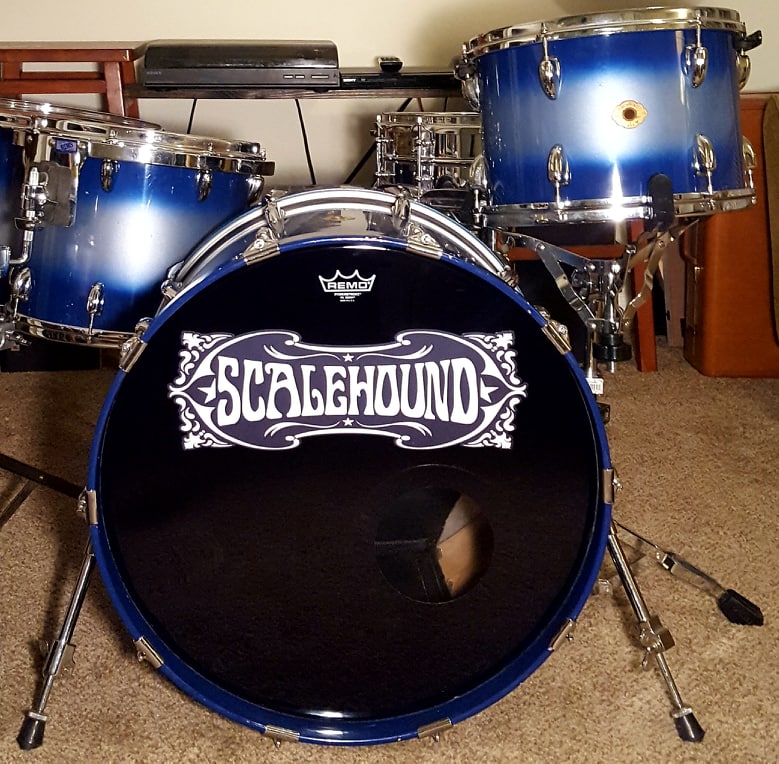
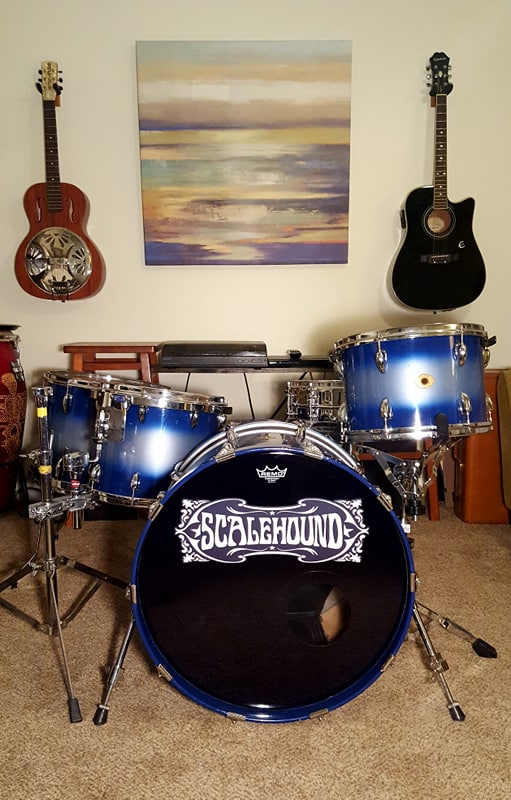
Terry: I had seen BJS briefly back in the 90s and heard a lot about them. Their singer and drummer were in a band together back in 1991 and SCW played a show together with actor Lou Diamond Phillips. The Sirls brothers, which are the core of Scale Hound, opened for STACK in a local club back in 2006. I was really impressed with what they did as a duo and introduced myself. I didn’t even know that they were in BJS. The funny thing is that we’re from the same part of west KY, but never met until coming to Nashville. When I was deployed in 2012, I contacted them on FB and asked if they wanted to get together sometime. It wasn’t until I came back to Nashville in early 2016, that I contacted them again to see if they were still interested. It was in the slow cooker, but finally happened. The gumbo was about to come to a boil. As soon as we started working on songs, we felt an instant kinship and continued to develop songs as a band. They had a lot of great ideas, so we worked on them, rewrote a few and wrote new ideas that eventually became the “Take the High Road” CD.
Mike: I've been listening to the new album, Take the High Road, which is amazing. What are some of your favorite songs, drum wise, from the record?
Terry: The High Road, 45 Reasons, Reborn and How Do You Live With Yourself are my favorites to play. They all have an edge that allows me to play heavy and lay it down with a solid groove. The whole album was done with a click. I really enjoyed doing it that way, because I just kept it right on the beat and drove it home. The only one that gets off the click is Reborn and that was intentional. I wanted the song to gradually speed up toward the end to give it a bit of a punk feel. We actually mixed two versions together. The first half was right on the click but the second half just didn’t have the energy I wanted, so we took the last half from another take and edited them together, so it would keep speeding up. I think it turned out perfect.
Mike: Who are some of the new drummers or bands that you’re listening to?
A: Most everything I like has some connection to the 60s and 70s music that I love so much. There’s a new band called “Black Pumas” that I like a lot. They sound like an R&B band from the early 70s. Gary Clark Jr. is really good. Queens of the Stone Age is awesome. There’s some new Americana that I like but for the most part, I still listen to my old records or something that sounds like an old record. Billy Gibbons has a new solo record that is really interesting.
A lot of the stuff I listen to doesn’t have drums at all. I find it hard to enjoy some times, especially when there is a hot-shot drummer. Mavis Staples is always great; Bjork has some really innovative electronic beats; and I love world music; everything from Reggae to South African pop and Afro-Beat....Afro-Cuban music is the best. I can listen to a hot shot Cuban percussionist all day long.
As for Catfish...I like my catfish crispy on the outside, and soft on the inside. The seasoning has to penetrate through the whole fish. A dry coffee/spice rub is the key to getting the best flavor. What’s in ever it be, its gots to be spicy.
Mike: Amen to that!! A MASSIVE thanks to Terry for an amazing interview and insight into his playing!! Until next time.....

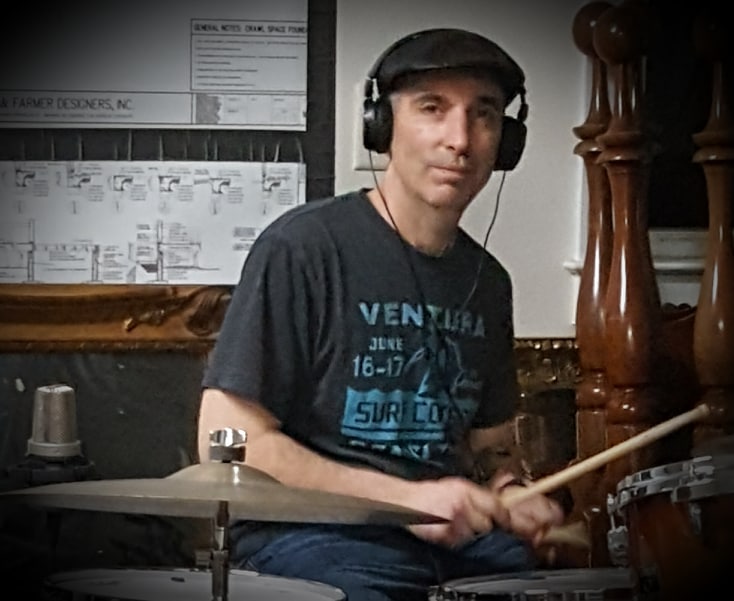
CHRIS HARDESTY
So today I'm interviewing Chris Hardesty, the power behind many legendary Kentucky Bands, including Supafuzz, Rufus Huff, and Black Mountain Prophet, just to name a few
Mike: Chris, what was that pivotal moment that made you want to pick up the sticks??
Chris: Well I had many family members who are drummers including my father. My uncle. 2 cousins and my son. I was around drums and music all the time. Everybody played something!!
Mike: What age did you start?
Chris: I was 3
Mike: WOW! I was 6 when I started, you was definitely born to play it sounds like!
Chris: I was hyperactive and wild as a child but it seemed that behind a drum set I found a focus I’d never known before. It came easy to me. Then in 1964 when I saw the Beatles on Ed Sullivan that made realize what I wanted to do
Mike: So Ringo was an early influence on you?
Chris: The whole band in general. The look the sound. The vibe. All of it. My cousin Robin turned me on to bands like the Kinks, The Monkeys, Etc. Radio was huge for me as a kid. WAKY to be exact.
Mike: That era really was a game changer for music in general. Great era for not only Rock, but Jazz, Country, and Blues.
Chris: I’d hear killer songs and didn’t realize who they were. I just knew I liked what I heard. As a small child I didn’t know the difference all I knew is that the beats were different.
Mike: Exactly Brother
Chris: My grandmother would let me sneak and play my uncles drums and that’s my first exposure to a real kit.
Mike: What kind of kit did your uncle have then?
Chris: They were a red sparkle early 60s Ludwig kit then traded for a cream colored pearl 1963 Ludwig kit and my cousin still has them today. Mint with the same heads on them. My grandmother would save all my uncles broken sticks n carve tips on them for me to use.
Mike: Your grandma wanted to make sure you had sticks! What an awesome story! Seems like you've pretty much played Ludwig exclusively over the years. I did see a pic of you playing Rogers at a high school show
Chris: Yes. That was a 24” Rodgers Kick that belonged to a buddy and I used it because I wanted a big sound for the room we were playing.
Mike: And that's something that has came up many times when drummers discuss you....your sound.
Chris: Half of that is the way I HIT the drums. Dean Smith, the bass player for Rufus Huff ( who is also a drummer), wanted me to play his old slingerland jazz kit and when I did he said NO it’s not the drums I play it’s the way I hit them. It’s like milking the tone out of whatever kit I sit behind. As far as tuning, I try to find each drums sweet spot and use it to your advantage. I don’t use any meters or tuning devices. I tune by ear.
Mike: I honestly tune the same way Chris. Never got the sound I totally wanted with a drum dial. Your style is as unique as your drum sound. You can hear a lot of different genres in your playing. Who would you say has been your biggest influences?
Chris: Well, Bonham was huge for me. And Mitch Mitchell of Hendrix was a huge influence. At that point I didn’t realize the blues and jazz influence that came with his style. If the band was funky n the drummer was good I was digging it.
Mike: I can hear Tower of Power in there too.
Chris: Saw Tower of Power and freaked out over them. Saw James brown as well and flipped. As I said if the drummers were good. I was all over it.
Mike: I totally flipped when I first heard TOP! Killer rhythm section, as is James Brown. Lets talk about your drum set up.
Chris: My drum set up was directly affected by my first junky little kit I got of my own when I was 8 or 9. My kick had no legs on it so I had to put it against the wall and had no hi hat so I put a crash cymbal in a dining room chair and to be able to reach it I put it on the right hand side. And now you know why I play the way I do. I never got away from that. I wanted the kit to look as close to what I saw others play except that caused me to have to invert a drum run around the toms DONT ask me how I do it because I’m not sure myself it just works.
Mike: And brother, it works great!!
Chris: I’m left handed and left footed as well so the bass was played with my left foot. I also play guitar and mandolin left handed upside down and I do not switch the strings.
Mike: You actually played Mandolin on the Black Mountain Prophet record as well, correct?
Chris: 2 songs. Brandy and the song alone in the world.
Mike: You did some really solid Mandolin playing on those.
Chris: Not mentioned in the credits but that’s backwards me playing
Mike: Aint that the drummer’s luck!! We always get left out!!! Who are some of the fellow Kentucky drummers you've been in to?
Chris: Well obviously Fred Young, who’s a very close buddy. John Fred of Black Stone Cherry. I sat several times with him as a young kid and showed him things. Jeff McAllister, Finner Castner, Sherri Mcgee, Jon Mcgee, Terry Thomas, the list is long.
Mike: Me and you have chatted a few times about bands we like. Who are some of the current bands your digging?
Chris: My favorite bands of the 90s were STP. Soundgarden, Alice in Chains, Kings X. Today I’m a huge Big Wreck fan. Ian Thornley is AMAZING.
Mike: I couldn’t agree more! I think I know the guy that turned you on to the Big Wreck Music….hmmmm.
Chris: I think your correct!
Mike: Tell us about the 90s Lexington / Richmond scene.
Chris: Lexington and Glasgow became second homes for me around that time, back in the Supafuzz days. I guess I played every club in Lexington and Richmond. Sadly, many don’t exist anymore. The Wrocklage Phone 3. JDI for example.
Mike: I was hitting the club scene and soaking it all in around that time. Went to those venues many times ( both performing and watching other groups ). It was an exciting time to be playing music. How would you describe it?
Chris: It was wild and competitive BIG TIME. So many killer bands.
Mike: Yes there was. Many of those groups was record deal ready, better than what was on radio by far.
Chris: We had a ball for sure. Phone 3 in Richmond was down right wild. That place was absolutely PACKED. Groovezilla, Shag, Catawampus Universe, Taildragger, and Gold Tooth Display.
Mike: I remember when GTD was Non-Chalant! I actually have the album with the Green cover!
Chris: YES!! I own the same CD!!
Mike: Black Cat Bone was the first local Lexington band I heard. A friend had the cassette and let me make a copy of it. That group gave birth to Supafuzz and Taildragger. I think you and Dean was down around Glasgow around then and gigging Lexington?
Chris: Dean and I had regular jobs! I was a store merchandiser and Dean owned car washes and we would bust ass all week then drive up to Lexington and play the weekend. It was almost undoable, but we did it. Sometimes I don’t know how we pulled it off.
Mike: The things we do for music!!
Chris: I recon so. It was an experience for sure.
Mike: Im very thankful for you taking time to do this interview Chris. You are a fantastic drummer that's influenced so many drummers over the years, including me. So I have one more question. What advice would you give the next generation of drummers?
Chris: Well !! The first thing is put instruments in the hands of your children. Give them the opportunity to learn the craft. If they show the slightest interest make it happen !!! Give the the space to run with it. My parents and grandparents made sure I had what I needed to become and do what I’ve done. I wouldn’t trade any of it back.

© Copyright BOOM TAP BOOM!!!